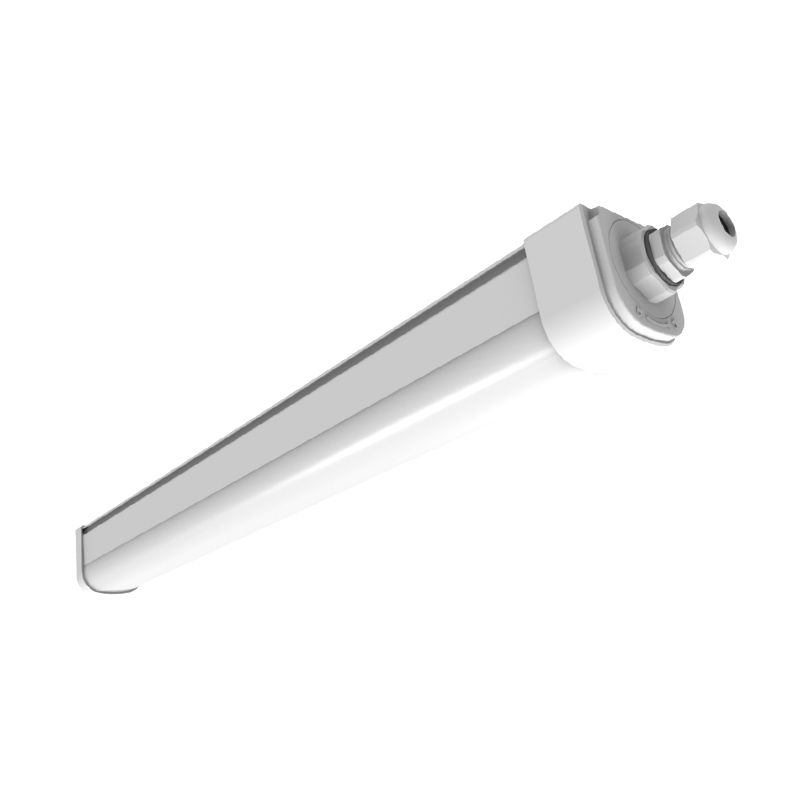


Suppose you are replacing an old fluorescent fitting above a workbench. One LED tube is labeled "1,800 lumens," while another says "3,200 lumens." Both are promoted as energy-saving, and the price gap is small. Which is the right choice? The honest answer is rarely "the brightest one." It depends on the size of the space, the mounting height, the optical design of the fixture, and the task being performed. This article explains what lumens actually mean, how many you need for typical rooms and workplaces, and where the "good" threshold sits for modern LED lighting.
Lumens measure the total visible light emitted by a light source. Watts measure the electricity it consumes. People used watts as a brightness guide for decades because incandescent bulbs converted watts to light fairly consistently. A 60 W incandescent bulb produced roughly 800 lumens. LED technology broke that link completely: a 9 W LED can generate the same 800 lumens, and a 15 W LED can produce 1,800 lumens or more.
So the first rule of choosing an LED is simple: compare lumens, not watts. A good general-purpose LED currently delivers 100 to 130 lumens per watt (lm/W). High-efficiency products reach 140 to 160 lm/W. Anything below 80 lm/W is poor value for a modern LED and usually points to older chips, a weak driver, or a diffuser that swallows too much light.
Quick answer: For most indoor rooms, 2,000 to 4,000 lumens is a good range. For workshops and garages, plan for 6,000 lumens or more. A good LED delivers at least 100 lm/W.
The lumen ranges below are practical starting points for most residential and light-commercial spaces. They assume typical ceiling heights of 2.4 to 3 meters, with fixtures distributed reasonably across the room rather than concentrated in one corner.
| Space | Recommended Lumens | Approx. per m² | Common Fixture Choice |
|---|---|---|---|
| Bedroom, relaxed | 1,500–2,500 | 120–200 | LED ceiling light, bulkhead |
| Living room | 2,500–3,500 | 180–250 | LED panel, batten fitting |
| Kitchen and food prep | 3,000–5,000 | 280–400 | LED batten, panel light |
| Bathroom and utility | 2,000–3,500 | 220–320 | LED bulkhead, ceiling light |
| Home office and study | 3,000–4,500 | 300–450 | LED panel, batten |
| Workshop and garage | 6,000–10,000 | 400–600 | LED tri-proof light |
| Warehouse aisle or production | 10,000–16,000 | 500–800 | LED tri-proof, high-bay style |
These ranges are not hard limits. A dark-walled workshop with only one central fitting needs more lumens than the same floor area with white walls and even light distribution. Use the table as a starting point, then adjust for actual conditions.
The quickest way to estimate a lumen target is to multiply the room area by a target illuminance level. In North America, the common unit is the foot-candle: one foot-candle equals one lumen per square foot. In Europe and Asia, lux is more common: one lux equals one lumen per square meter.
Worked example: a 12 m² home office with a target of 400 lux needs about 12 × 400 = 4,800 lumens reaching the desk surface. Since most LED fixtures transmit 85 to 95 percent of raw lumens through their lenses and diffusers, choose fixtures that supply roughly 5,000 to 5,600 raw lumens in total.
Two fixtures with identical lumen ratings can perform very differently in a real room. Four factors decide whether the specified lumens actually reach your eyes and your tasks.
Light with a higher correlated color temperature (4000K to 5000K) is perceived as brighter than warm 2700K to 3000K light at the same lumen level, because the human eye responds more strongly to the middle of the spectrum. If you choose warm-white for a workshop, add 10 to 15 percent more lumens to compensate.
A narrow-beam fixture concentrates light into a small pool, creating high illuminance on a work surface. A wide 120° beam spreads the same light, producing lower center illuminance but better uniformity. For general area lighting, 120° is a practical compromise between spread and brightness. Many LED batten fittings with optimized optics maintain excellent uniformity along long rooms.
Illuminance drops with the square of the distance from the source. A 10,000-lumen tri-proof light mounted at 3 meters will not look twice as bright on the floor as a 5,000-lumen light at the same height, because reflector design, lens diffusion and tilt angle all influence the final distribution. Always check the photometric data instead of guessing from the lumen number alone.
Bare LED chips create harsh shadows and uncomfortable glare even when total lumens are sufficient. Good fixtures use prismatic lenses, diffusers or anti-glare fins to soften the source. This causes a small loss in raw lumen output, but the usable light is usually much better for real tasks.
Luminous efficacy tells you how many lumens you receive for each watt of input power. Incandescent technology managed only 12 to 15 lm/W. Compact fluorescents reached 55 to 65 lm/W. Good-quality LED products comfortably achieve 100 to 130 lm/W, and the best exceed 150 lm/W.
Efficacy figures are only meaningful when they are measured under repeatable conditions. That is why a reliable manufacturer tests LED tri-proof lights and other fixtures in calibrated laboratories such as TUV and SGS witness facilities. Verified lm/W data protects you from overrated lumen claims and helps you compare products fairly.
A lumen figure printed on a box is usually the initial raw lumen output of the light source, not the final delivered light of the whole fixture. Reputable brands provide three additional numbers: the lumen value measured at a stated test current or wattage, the optical efficiency of the complete fitting, and the L70 rating that describes how long 70 percent of initial lumens are expected to remain. A fixture can legitimately show 6,000 lumens at the chip level, but if the diffuser absorbs 12 percent and the driver runs at reduced current, the delivered light may be closer to 5,000 lumens. When two products look similar on paper, the one with verified photometric data is usually the safer choice.
Once you know the target lumen range, the next step is to choose a fixture suited to the environment. The same lumen number can come from very different product families, and operating conditions often matter more than raw brightness.
| Fixture Type | Typical Wattage | Typical Lumens | Best Application |
|---|---|---|---|
| LED tri-proof light | 50–80 W | 6,500–10,000 | Workshops, garages, damp and dusty areas |
| LED batten fitting | 20–40 W | 2,400–4,800 | Kitchens, offices, corridors, retail |
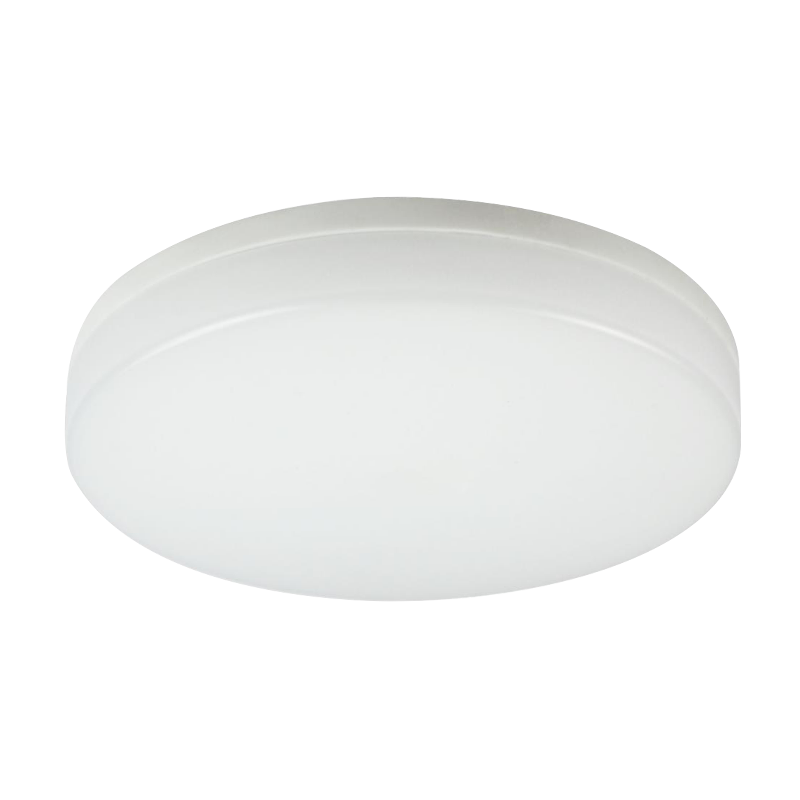
| LED bulkhead | 18–25 W | 1,800–3,000 | Stairwells, utility rooms, covered entrances |
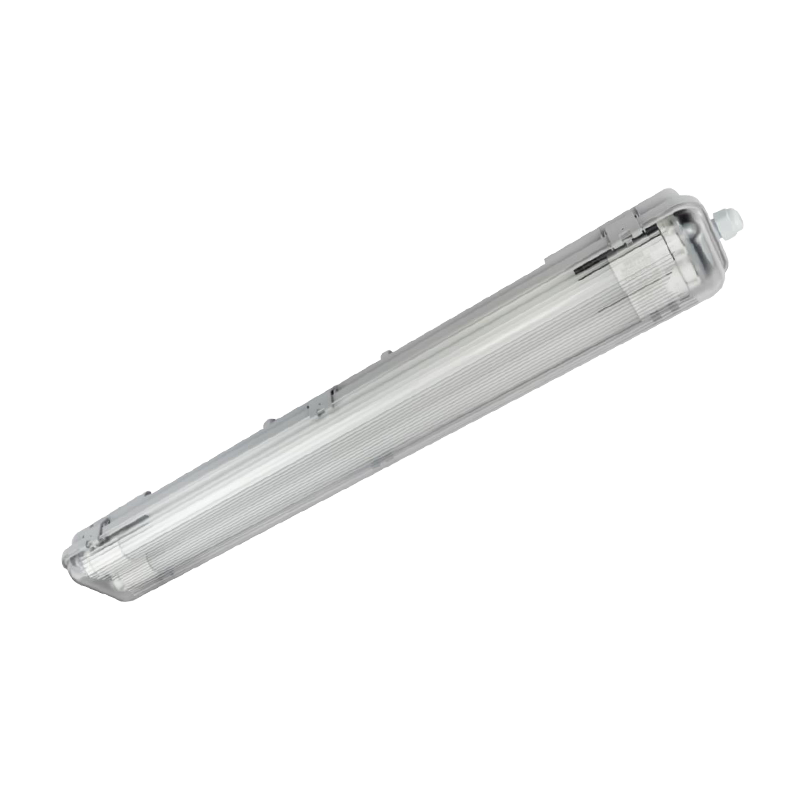
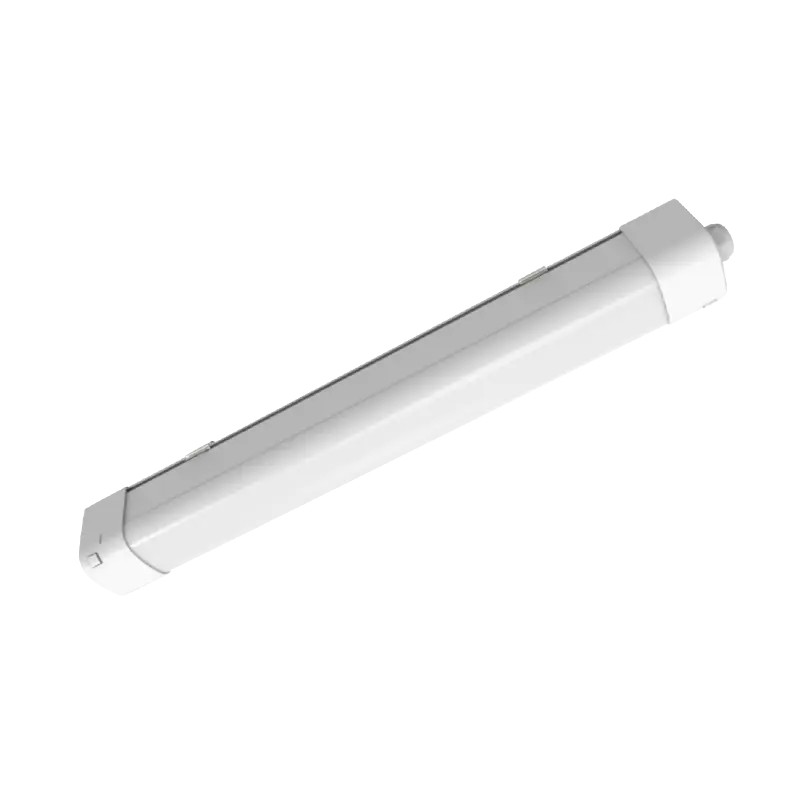
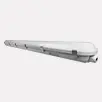
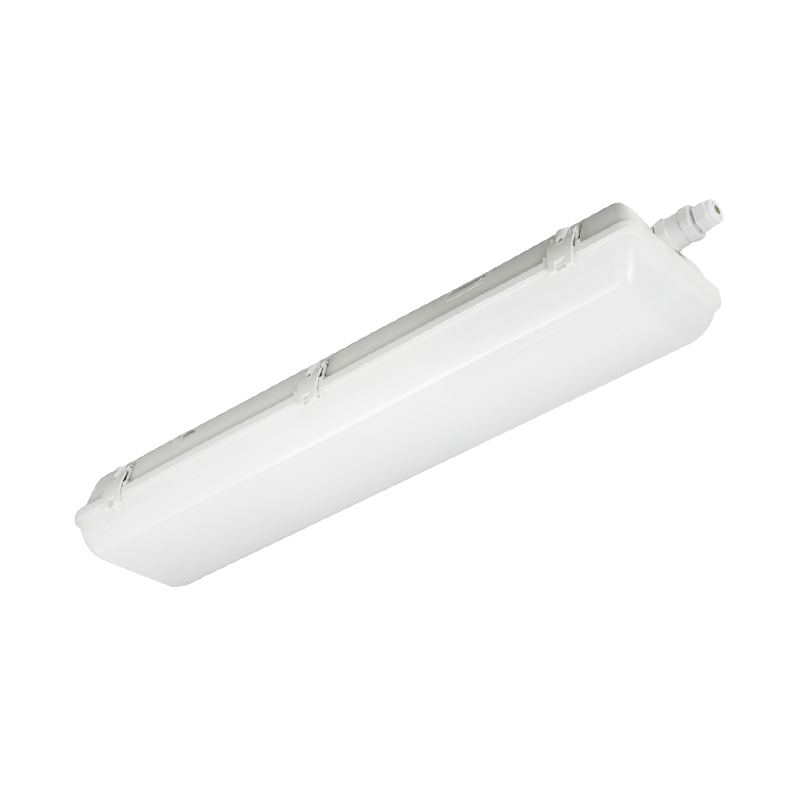
For workshops, garages, loading docks and wash-down areas, an LED tri-proof light provides high lumen output with water, dust and corrosion protection. A typical 50 to 80 W tri-proof fitting produces 6,500 to 10,000 lumens, which is the sweet spot for a two-car garage or a small fabrication bay. Look for IP65 or higher, an aluminum or PC housing with good thermal management, and a 120° beam for even coverage.
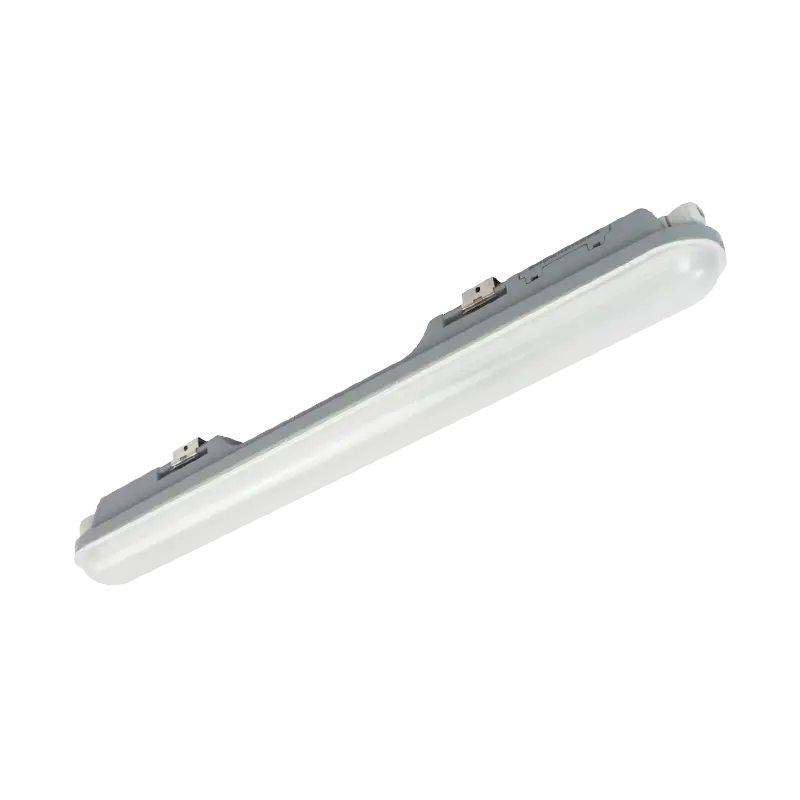 LG06J Aluminum Alloy LED Tri-Proof Light with 120° Beam AngleThis tri-proof luminaire offers IP65 protection and aluminum housing, delivering up to 5,280 lumens at 110 lm/W. Its 120° beam suits workshops and garages, with selectable power and color temperatures for even coverage.View Product →
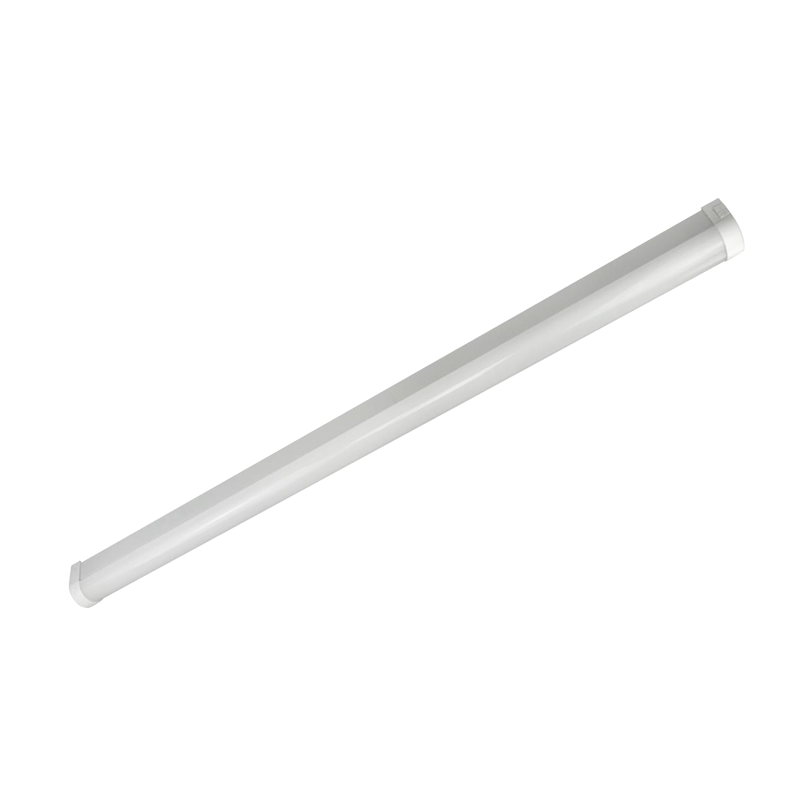
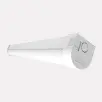
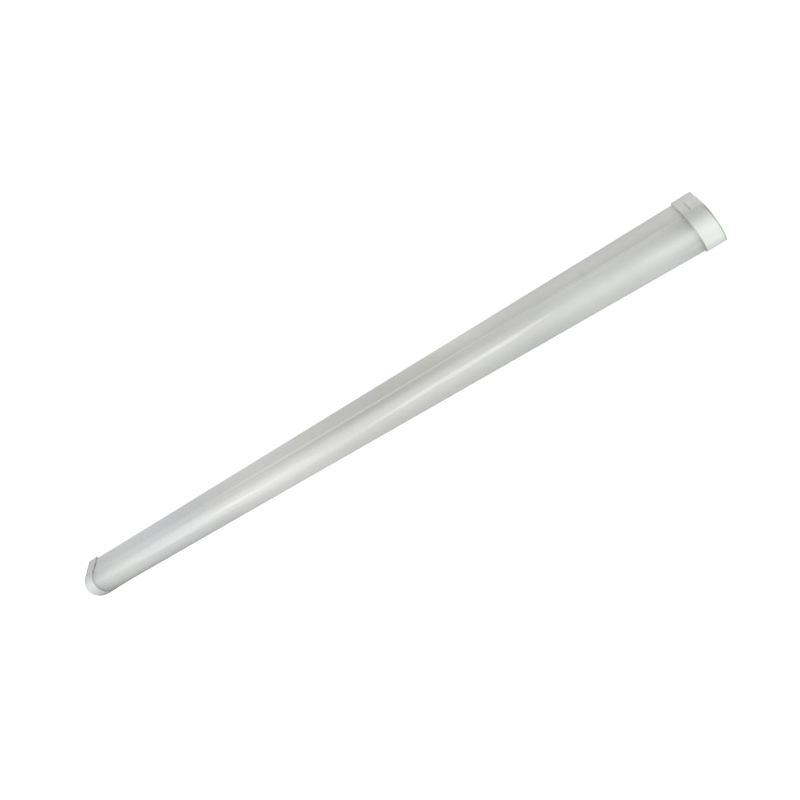
Batten fittings are the modern replacement for old fluorescent strips in corridors, retail shelving, offices and kitchens. Slim profiles with 120° beam angles work well at standard ceiling height, and linkable versions make it easy to reach higher lumen totals without adding extra wiring. A 40 W batten delivering 4,000 to 4,800 lumens is a practical choice for a home kitchen from just one or two fittings.
 LG15D Slim LED Batten Fitting with 120° Beam and IP20A linkable batten available from 10W to 75W, producing up to 11,250 lumens. Its slim profile and cable entries at both ends make installation easy in corridors, kitchens, and offices.View Product →
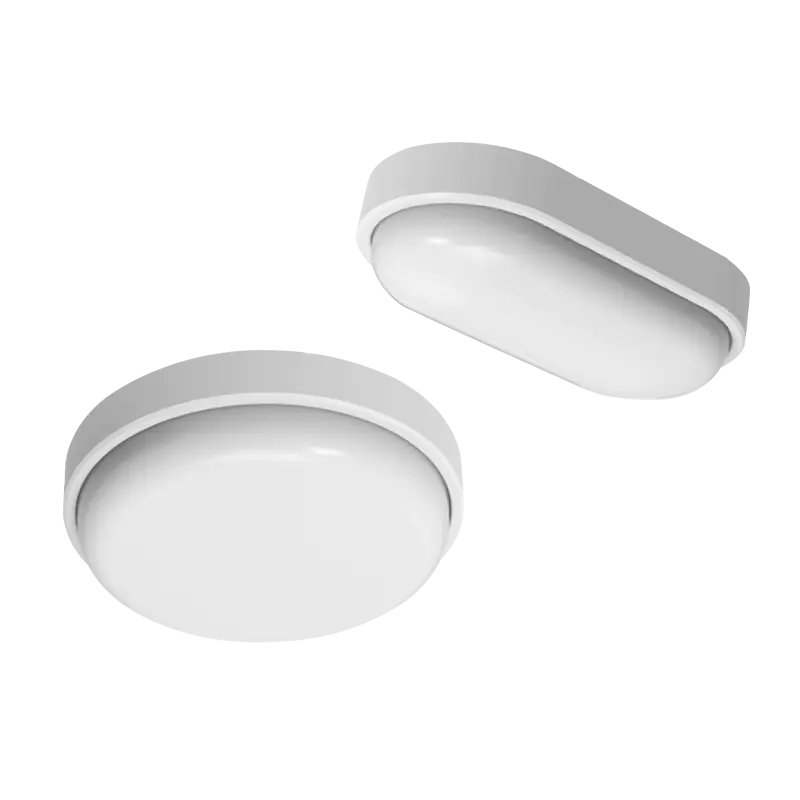
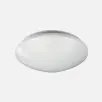
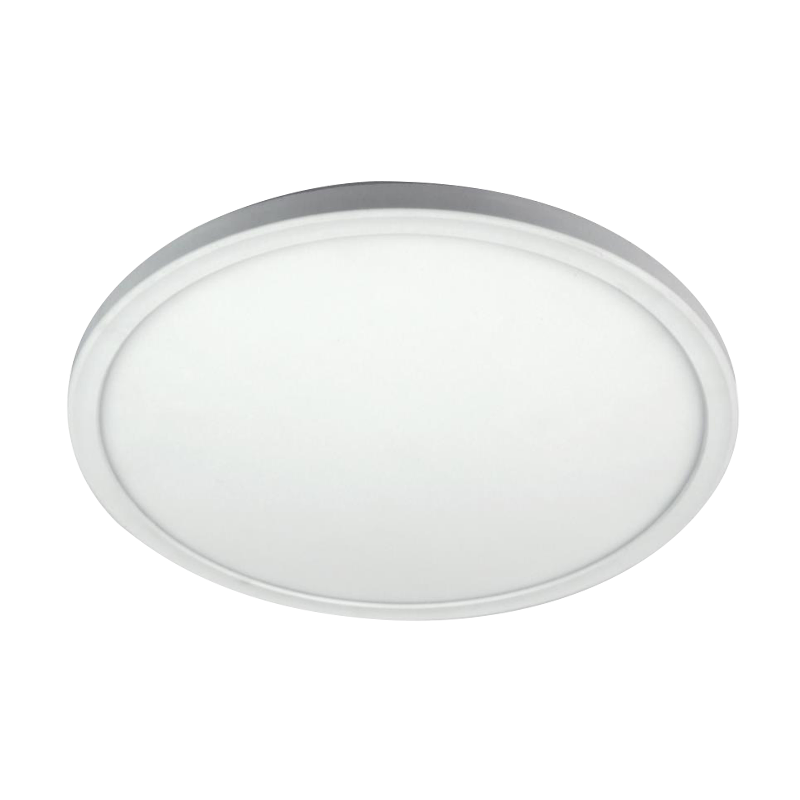
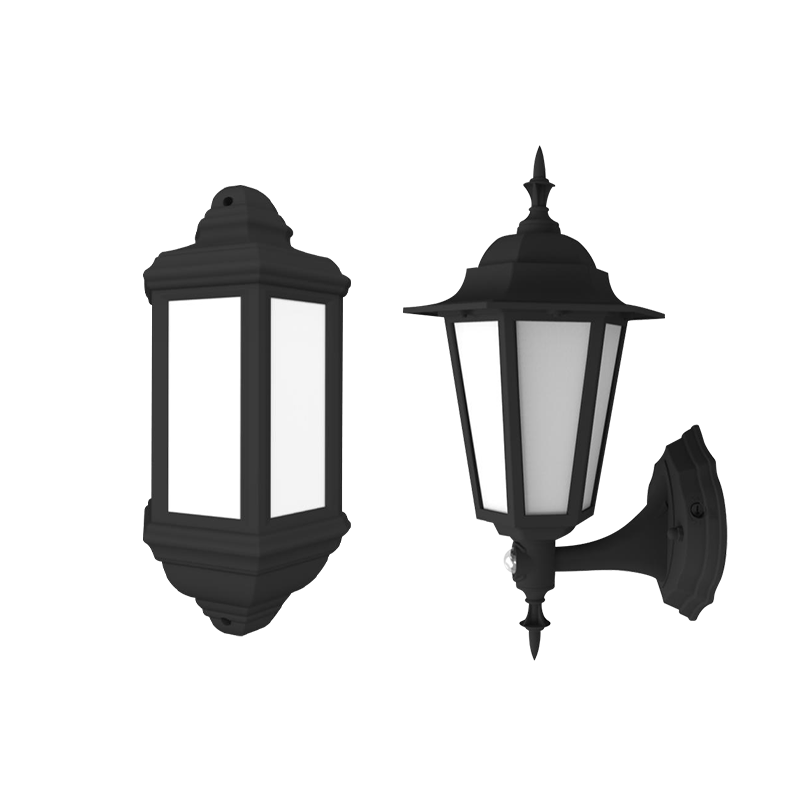
Bulkheads are compact surface-mounted fixtures used in stairwells, corridors, utility rooms and covered outdoor areas. They typically produce 1,800 to 3,500 lumens, which is enough for a small room or supplementary lighting. Some models add adjustable anti-glare and dimming, making them useful for hotel corridors and reading corners.
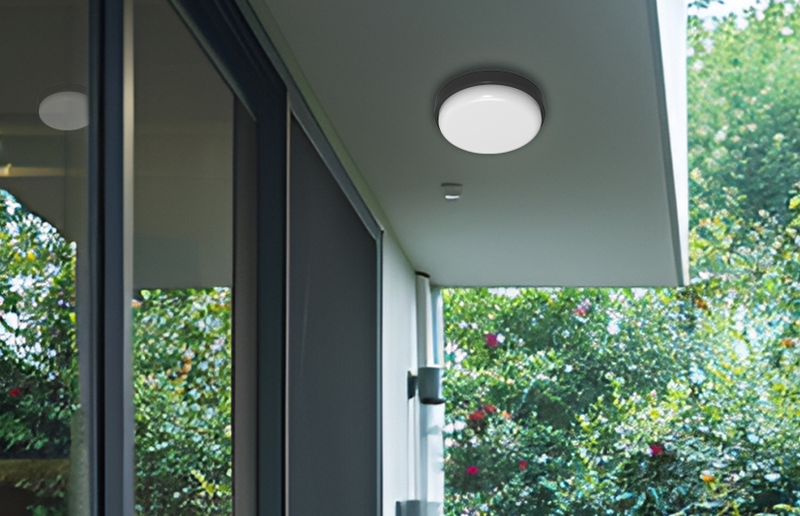 LG19D Adjustable Dimmable Indoor LED Bulkhead with PIR SensorThis IP54-rated bulkhead offers anti-glare and dimming, with optional PIR sensor models. Emitting up to 980 lumens, it suits bedrooms, corridors, and stairwells where soft, controlled lighting is needed.View Product →
Yes, for a typical master or guest bedroom. In a 10 to 15 m² room, 2,000 lumens from a ceiling or wall fixture provides roughly 150 to 200 lux, which is comfortable for relaxing and moving around. Separate bedside lamps can add localized task light for reading.
Most living rooms feel comfortable with 2,500 to 3,500 lumens in total from all fixtures. If you choose warm 2700K to 3000K light, aim toward the upper end of that range because warm light appears dimmer than neutral or daylight tones at the same lumen output.
If you mean a 60-watt LED fixture, the output is typically 6,000 to 8,000 lumens. That is more than enough for a kitchen or a compact workshop. A "60 W equivalent" LED bulb, on the other hand, produces around 800 lumens while consuming only 8 to 9 watts.
Any value of 100 lm/W or higher is good for a typical commercial or industrial LED. Values between 120 and 140 lm/W are excellent, and 150 lm/W or more indicates a very high-efficiency product. Always verify the reported value from a photometric test report rather than relying on the label alone.
5,000 lumens is on the high side for a very small office, but it is appropriate for a 12 to 16 m² room used for detailed work. Use a dimmable LED or split the light across two fittings so you can adjust brightness during the day.
No. Color rendering (CRI), glare control, uniformity, flicker performance and long-term lumen maintenance matter just as much. A 4,000-lumen fixture with CRI 80 and a well-designed diffuser can be more comfortable and more useful than an 8,000-lumen bare-chip light that produces harsh shadows.
Choosing the right LED brightness comes down to a small set of practical numbers: 1,500 to 3,500 lumens for general rooms, 3,000 to 5,000 lumens for task-heavy spaces, and 6,000 to 10,000 lumens for workshops and garages. Verify the lumens-per-watt rating, select the fixture type that fits the environment, and pay attention to color temperature and optical design. When a lumen figure comes from a manufacturer that tests its products in accredited laboratories, you can trust it far more than a label that promises bright light without evidence.



No.8, Ankang West Road, Zonghan Street, Cixi City, Zhejiang Province, P.R.China
0086-574-6320 0283
Copyright © Ningbo Longer Lighting Co., Ltd.
All Rights Reserved.
 Wholesale LED Lighting Fixtures Manufacturers

 Deutsch