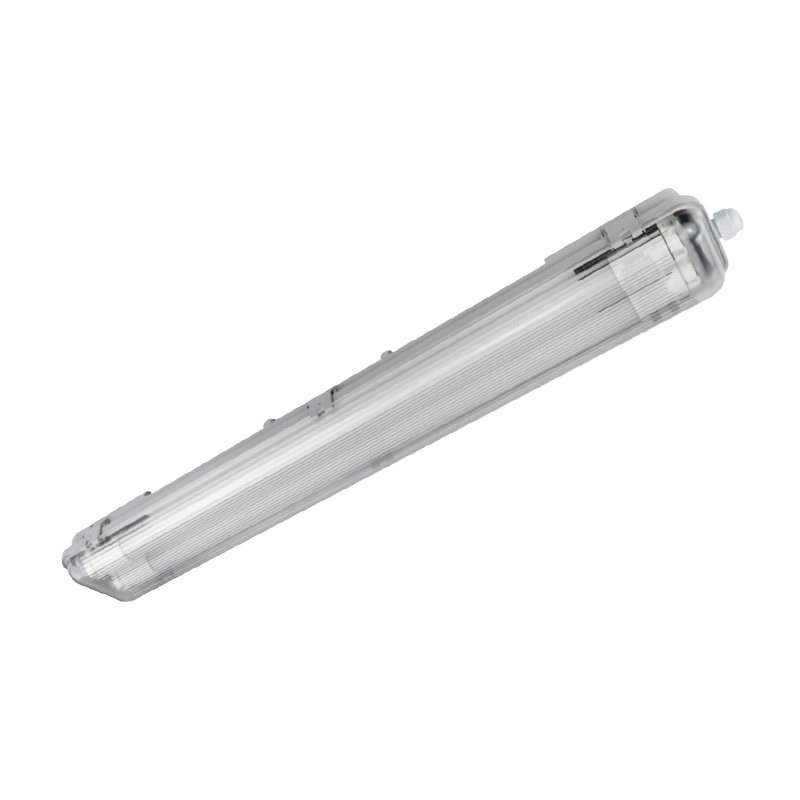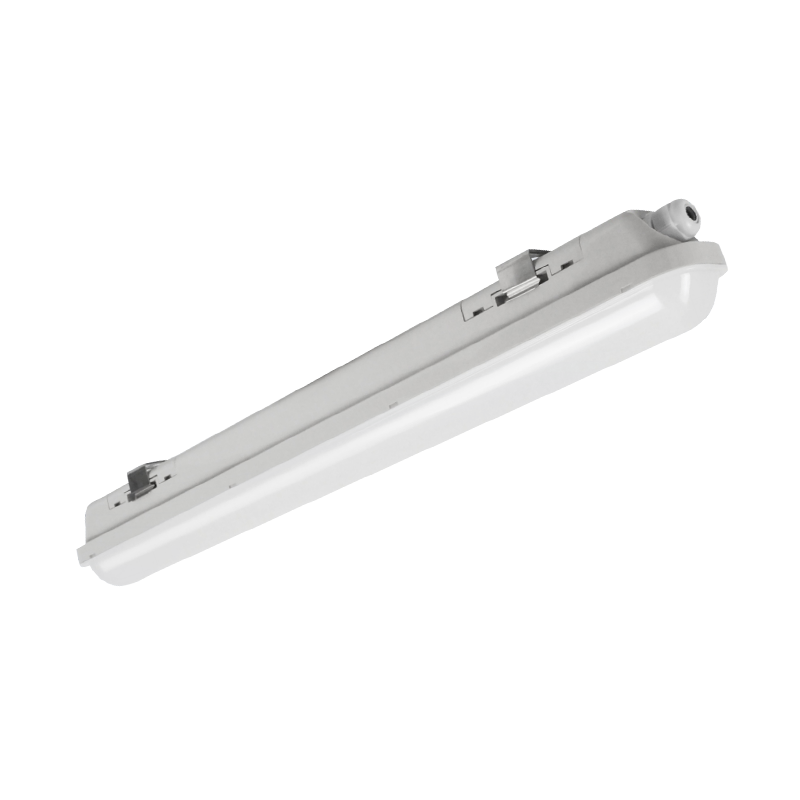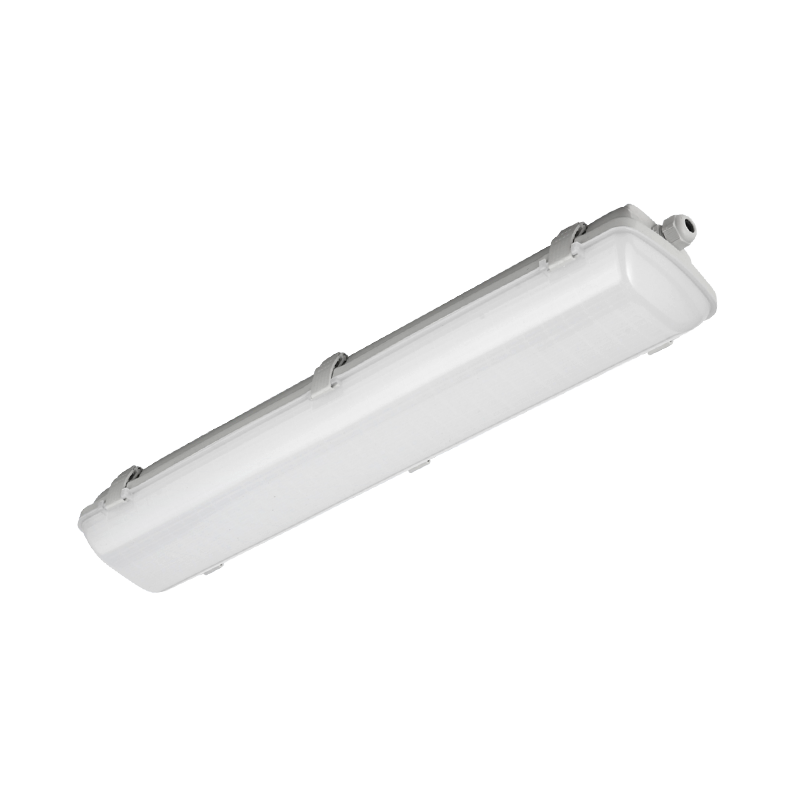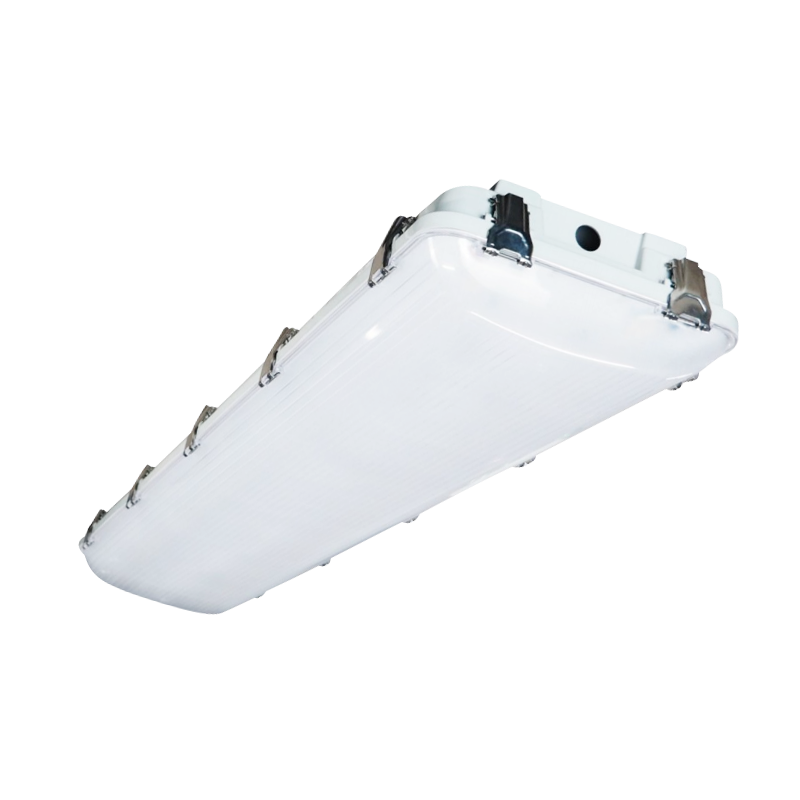


An LED batten is a complete linear luminaire. It usually contains the housing, diffuser or lens, LED board, driver, end caps, mounting brackets, and terminal block in one finished fixture. A tube light is a lamp. It may be a T8 or T5 LED tube designed to fit into an existing batten, troffer, or industrial housing, or it may be a tubular LED product with its own integrated driver and lampholder compatibility requirements. The difference is not only shape. It changes how the light is distributed, how the product is installed, how it is maintained, how it is controlled, and how the project should be specified.
For a new lighting layout, the batten is normally the more predictable choice because the optical system, heat path, driver compartment, and mounting method are designed together. For a retrofit where the existing housing is sound and the goal is to replace fluorescent lamps, a tube light can be attractive, but the existing control gear and lampholder condition must be checked carefully. The worst specification mistake is to treat the two as interchangeable because they both look linear and both produce a line of light.
A finished luminaire. Housing, optics, driver and brackets are designed together and approved as one product.
A lamp. It relies on a host fixture, lampholders and sometimes existing control gear to perform as intended.
| Decision point | LED batten | LED tube light |
|---|---|---|
| Product boundary | Complete luminaire with housing, optics, driver, and mounting hardware | Lamp or tube assembly; may rely on an existing fixture, lampholders, and sometimes existing control gear |
| Typical use | New linear lighting, workshop rows, storage aisles, retail back-of-house, utility areas, and surface or suspended mounting | Replacement of fluorescent tubes, retrofit projects, and enclosed or existing linear housings where compatibility is verified |
| Optical control | Reflector, diffuser, lens, and beam angle are part of the fixture design | Optics depend heavily on the host fixture and tube diffuser; performance can change when the housing changes |
| Installation risk | Fixture-level approval covers the complete assembly | Compatibility, lampholder condition, ballast removal, and wiring method must be confirmed |
| Maintenance | Replace driver, diffuser, or complete luminaire depending on design | Replace tube, starter, lampholder, or internal driver depending on tube type |
| Project documentation | Fixture family data, photometric files, driver data, and installation instructions are usually supplied together | Tube data must be matched to the host fixture and existing electrical conditions |
The chart is not a claim that one product is always better. It shows where each format tends to reduce uncertainty. A new installation gives the batten an advantage because the whole luminaire can be selected as a system. A retrofit gives the tube an advantage only when the existing housing, lampholders, wiring, and control gear have been inspected and the tube is approved for that exact condition.
A batten is built around a linear housing. The housing may be steel, aluminum, or plastic, with a diffuser or lens clipped or screwed into place. The LED board is fixed to a heat-conducting surface, the driver sits in a separate compartment or a protected section, and the end caps close the profile. Mounting brackets, suspension points, and cable entries are part of the design. This architecture matters because heat, electrical isolation, optical alignment, and mechanical strength are handled at fixture level.
A tube light is built around a tubular envelope. It may contain an internal driver, or it may be designed for an external driver. It may be a direct replacement for a fluorescent tube, or it may be a dedicated LED tube that is not intended to work with old magnetic or electronic ballasts. The lampholder interface is the critical detail. A tube can appear to fit, yet still be unsuitable if the pin configuration, starter circuit, ballast type, or wiring method does not match the tube's instructions.
In a batten, the housing contributes to thermal management, stiffness over long spans, cable routing, and protection against dust and moisture. A slim batten and a reinforced industrial batten may use the same tube-like shape, but they are not the same product. A slim LED batten fitting with a 120-degree beam angle and IP20 protection is suited to clean indoor areas where the visual profile matters. A sealed tri-proof or vapor-tight fixture is intended for wet, dusty, or washdown areas where the complete enclosure has to resist ingress.
In a tube light, the host fixture controls much of that protection. If a tube is placed into a poorly sealed housing, the assembly may collect dust, allow moisture near live parts, or lose optical efficiency. That is why a tube light should not be judged only by the tube datasheet. The installation environment and the host luminaire are part of the performance envelope.
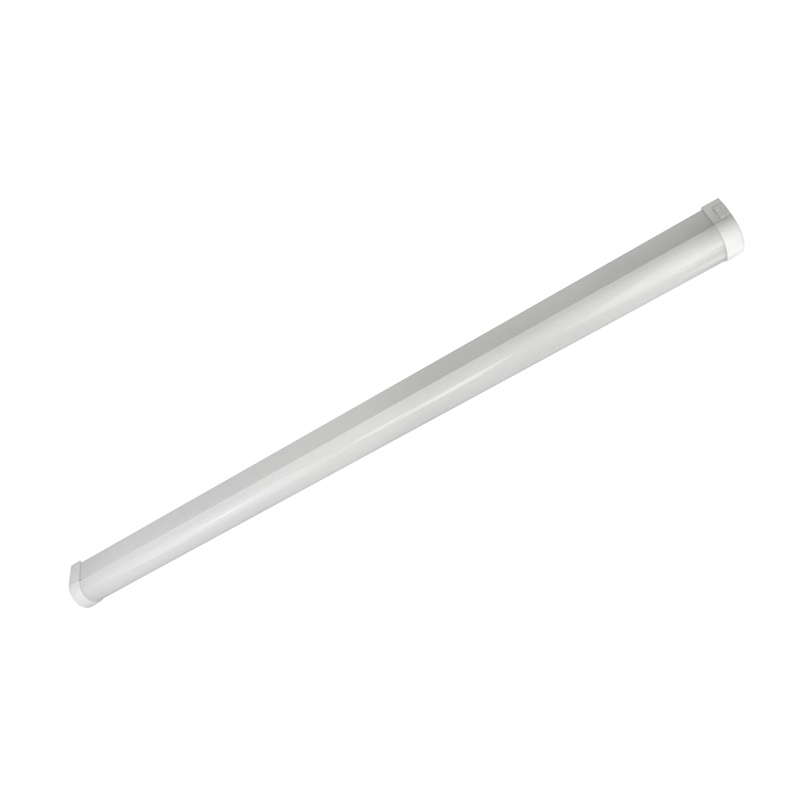
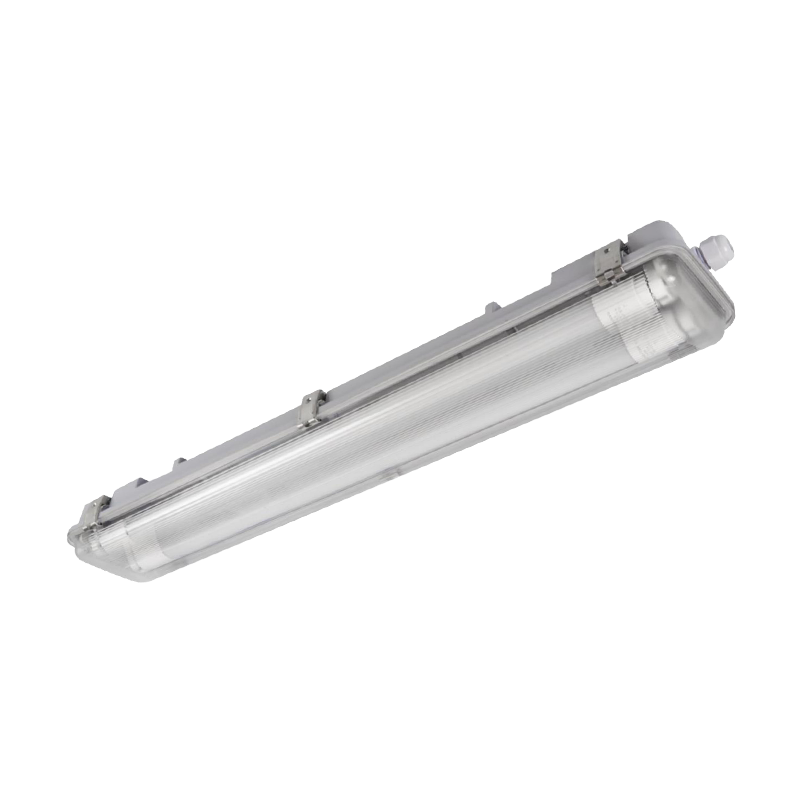
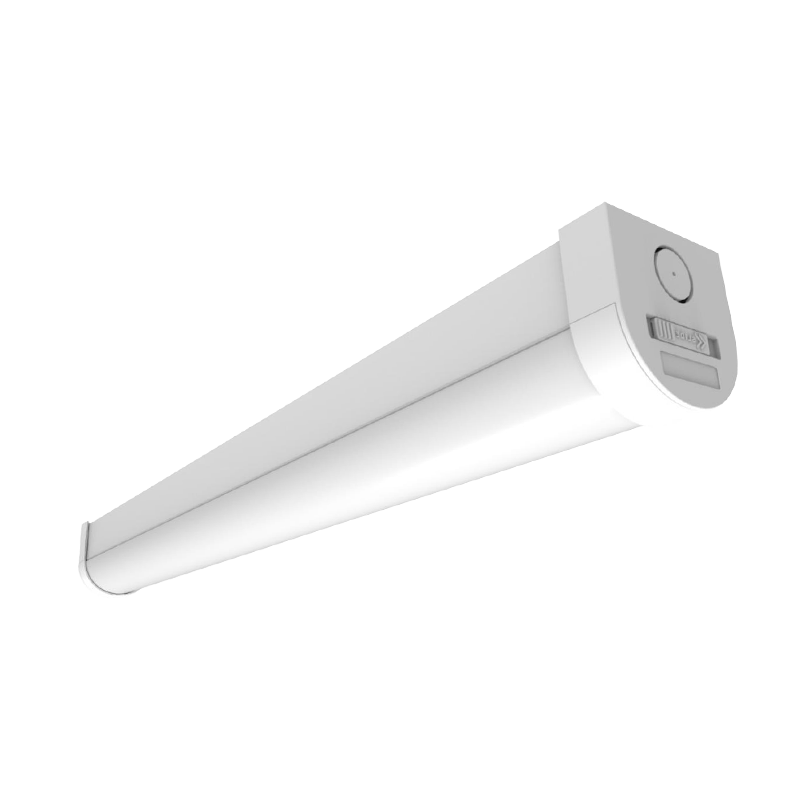
 LG15D Slim LED Batten FittingA slim batten available in multiple lengths and wattages, with defined beam angle, cable entry options, and easy-opening slide switch for linear layouts.View Product →
For projects that need a clean linear appearance, a slim batten family can simplify the layout because the beam angle, driver compartment, and mounting method are already defined. For existing tube-based systems, the selection work starts with the housing and wiring rather than with the lamp alone.
The most visible difference between an LED batten and a tube light appears in the light distribution. A batten is designed as a luminaire, so the LED spacing, diffuser material, reflector geometry, and beam angle work together. A well-designed batten can produce a smooth line of light with controlled glare, reduced dark spots, and predictable illuminance on the task plane. A tube light depends on the host housing for reflection and shielding. The same tube can look comfortable in one fixture and harsh in another.
For workshops, storage aisles, and production areas, glare control is not a cosmetic issue. It affects how quickly people can read labels, inspect surfaces, and move safely. A batten with a prismatic diffuser or a deep reflector can reduce direct view of the LEDs. A bare tube or a tube in a shallow housing may expose bright spots and create uncomfortable reflections on metal, plastic, or polished floors.
Opal or prismatic diffusers soften the source, but they also affect efficiency. The right balance depends on the task and mounting height.
A 120-degree batten spreads light broadly for general linear lighting. Narrower distributions may be better for high racks or focused task rows.
A tube that works at 2.5 meters may create glare at 6 meters if the host reflector is weak.
In offices and retail areas, people see the fixture from the side as well as from below. Side shielding matters.
Long runs need consistent LED spacing and diffuser performance to avoid bands of light and shadow.
The practical answer is to request photometric data for the complete assembly, not only for the light source. For a batten, the luminaire file should show lumen output, distribution, and spacing criteria. For a tube, the data should state the compatible housing and any performance change caused by the diffuser or reflector. For scenario-based comparisons, this guide to key scenarios and differences for LED battens is a useful companion when the project mixes task lighting, circulation areas, and utility spaces.
A batten is installed as a fixture. The installer fixes brackets, sets the housing level, connects the supply cable to the terminal block, and fits the diffuser. Because the driver is part of the luminaire, the electrical rating and wiring diagram are matched to the product. Maintenance is also fixture-based: a failed driver can be replaced if the design allows it; a damaged diffuser can be reordered; a complete luminaire can be swapped if the project prefers unit replacement.
A tube light is installed into a host fixture. The work may include removing the old fluorescent tube, checking lampholders, removing or bypassing a ballast, changing a starter, and confirming that the tube is approved for direct connection or for use with a compatible driver. If the existing wiring is aged, the installation risk rises even when the tube itself is good. A simple lamp swap can become an electrical modification, and that modification must follow the tube manufacturer's instructions and local wiring rules.
| Check | LED batten | LED tube light |
|---|---|---|
| Mounting surface | Confirm bracket spacing, ceiling type, and cable entry position | Confirm the existing housing is mechanically sound and suitable for the tube length |
| Electrical connection | Follow the fixture wiring diagram and driver rating | Confirm ballast removal or compatibility, lampholder condition, and pin configuration |
| Ingress protection | Use a sealed batten or tri-proof housing for dusty or wet areas | Ingress protection depends on the host fixture; a tube alone does not seal the housing |
| Future service | Replace driver, diffuser, or complete fixture depending on design | Replace tube, lampholder, starter, or internal driver depending on tube type |
| Downtime | Usually planned as a fixture replacement or new installation | Can be fast in a validated retrofit, but can be longer if wiring correction is needed |
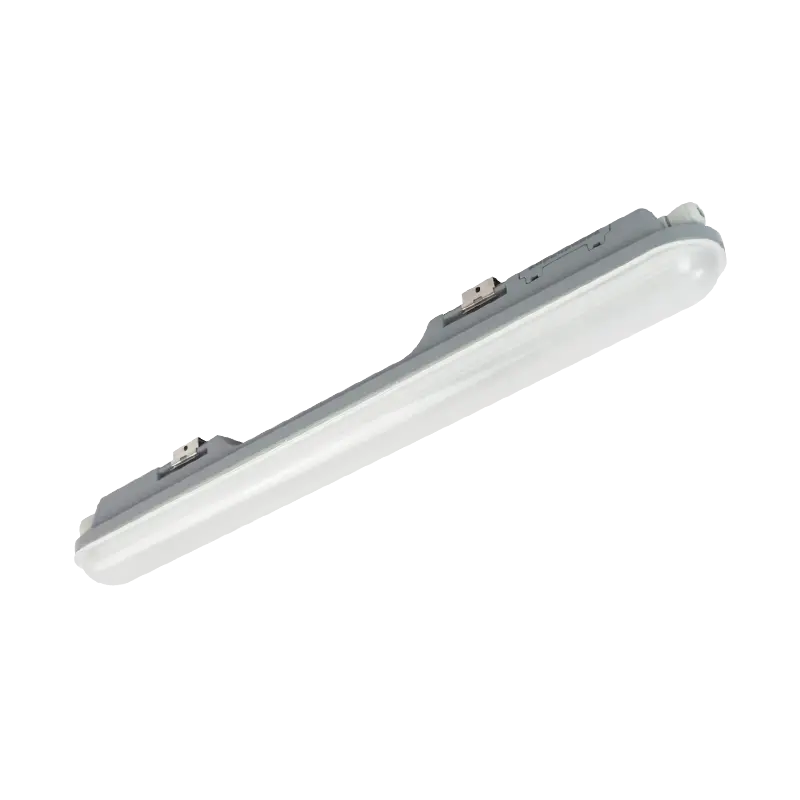
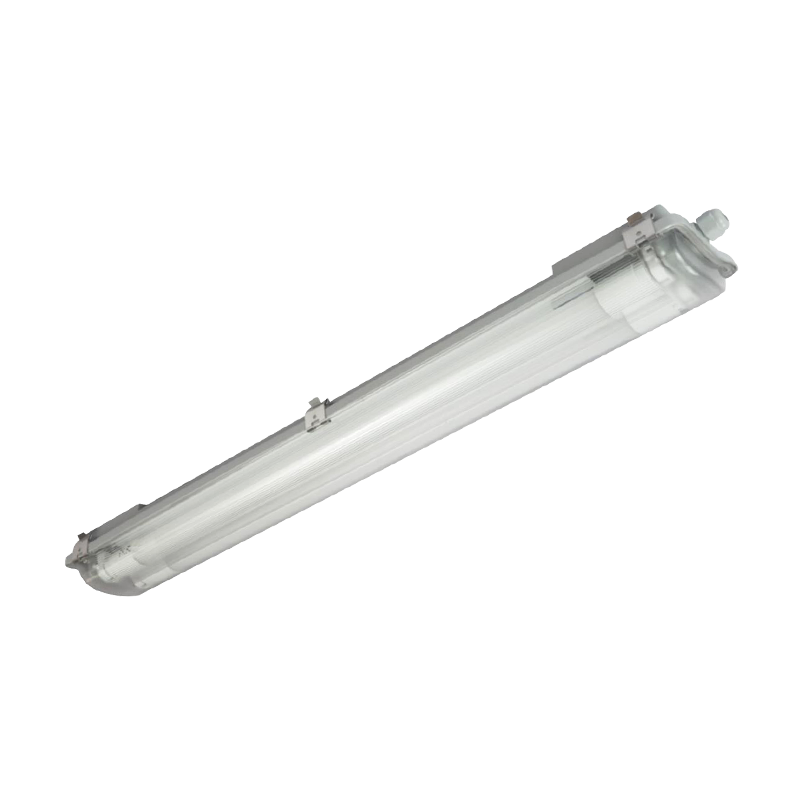
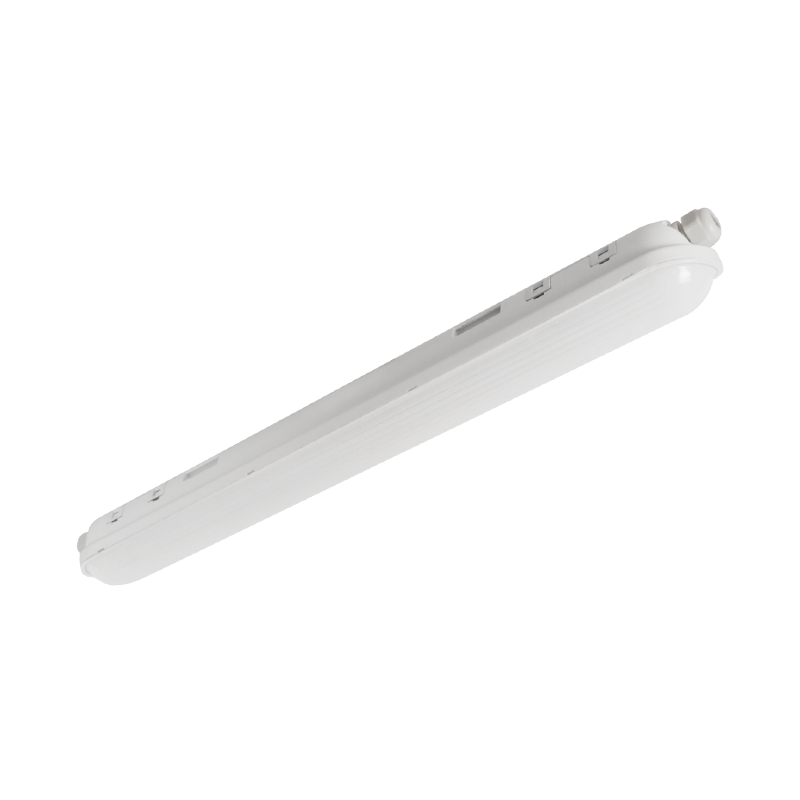
 LG07O T8 LED Tube Tri-Proof LightA workshop-oriented T8 tri-proof fixture with foldable lamp holders and IP65 protection, suited to replacement or new installations where tube housing conditions matter.View Product →
For a workshop with an existing T8 housing and a proven electrical condition, a T8 LED tube tri-proof product can be a practical replacement path. For a new workshop row, a dedicated batten or tri-proof luminaire gives the project one product responsibility and one service route.
The driver is the heart of an LED system. In a batten, the driver is selected, positioned, and thermally managed by the fixture designer. The fixture datasheet can state input voltage, power factor, dimming protocol, surge protection, emergency option, and operating temperature range for the complete luminaire. That makes control integration more straightforward because the project team is working with one product definition.
In a tube light, driver placement depends on the tube type. Some tubes have an internal driver and connect directly to the supply after ballast removal. Others use an external driver or are designed for a specific housing. Dimming tubes may require a compatible dimmer, a control signal, or a driver that is approved for the tube. Mixing old magnetic ballasts, electronic ballasts, sensors, and dimmers without a compatibility check can cause flicker, reduced life, or failure.
A batten with an accessible driver compartment is easier to service when control requirements change. A tube-based retrofit may be cheaper at first, but if the old housing has no space for a dimming driver or emergency module, the savings can disappear in rework.
Do not compare a batten and a tube light by wattage alone. Compare luminaire efficacy, delivered lumens, beam angle, color consistency, color rendering, glare control, power factor, surge protection, and the operating temperature range. A batten may consume the same watts as a tube, but the complete fixture can deliver more useful light to the task if the optics are better matched to the room. A tube may have excellent lamp efficacy, but the host housing can reduce the delivered lumens through absorption, poor reflection, or a dirty diffuser.
Environmental protection is another dividing line. An IP20 batten is intended for clean indoor spaces. An IP65 batten or tri-proof luminaire is designed for dust, moisture, and washdown conditions. A tube light can be placed in a sealed housing, but the protection belongs to the assembly. If the housing gasket is aged or the cable entry is not sealed, the assembly may fail even if the tube is rated for a harsh environment.
| Criteria | What to verify | Why it affects the choice |
|---|---|---|
| Delivered lumens | Fixture-level or tube-plus-housing data, including diffuser loss | Rated lamp lumens do not equal useful light on the task plane |
| Efficacy | Lumens per watt at the declared operating condition | Energy use and heat load depend on the complete system |
| Color quality | CCT, CRI, color tolerance, and consistency across the run | Poor consistency is visible in long linear installations |
| Glare control | Diffuser type, shield angle, and luminance at normal viewing angles | Comfort and task visibility matter in workshops and offices |
| Ingress protection | IP rating of the complete installed assembly | Dust and moisture performance depends on seals and cable entries |
| Operating temperature | Ambient range and driver thermal derating | High or low temperatures change life and output |
| Surge and electrical safety | Surge rating, insulation, earthing, and terminal capacity | Industrial sites often have switching transients and vibration |
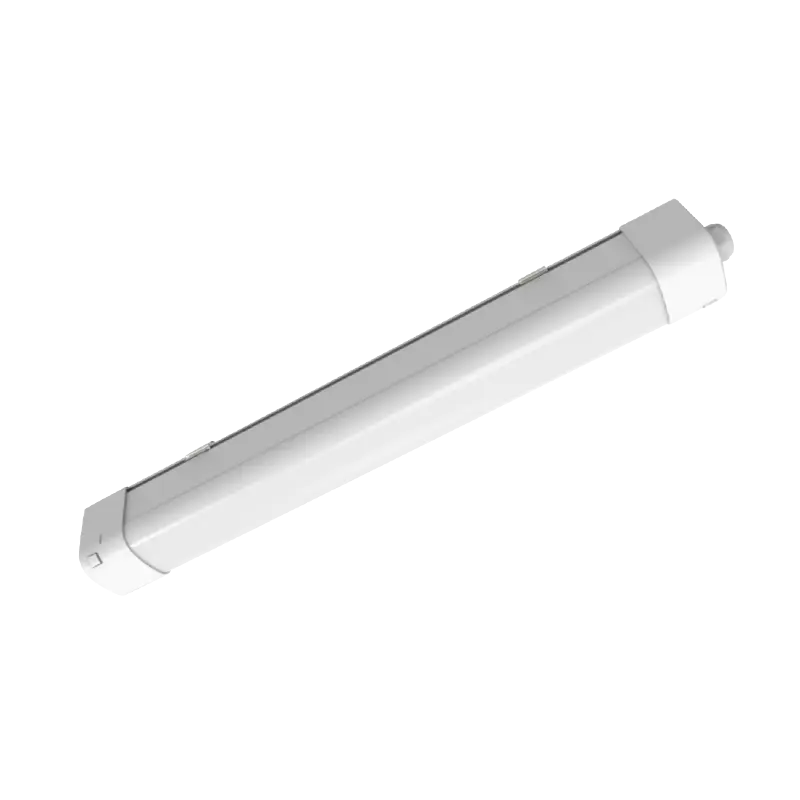
LG05C Ultra Slim LED Batten FittingAn indoor IP20 batten with slim body, back-side connection, and optional PIR sensor, offering a clean linear option for commercial and supermarket lighting.View Product →
When the project includes long runs, vibration, or thermal cycling, the mechanical design of the batten becomes as important as the LED board. A complete fixture can include captive screws, anti-loosening brackets, and a driver compartment separated from the LED heat path. Those details are difficult to add later to an existing tube housing.
LED battens are strong in new linear lighting layouts: production rows, warehouse aisles, packing areas, service corridors, retail back rooms, car parks, and utility rooms. They are also useful when the client wants a clean ceiling appearance or a fixture that can be surface-mounted, suspended, or continuous-run linked. The batten can be specified with a diffuser for comfort, a narrow beam for high racks, or a sealed housing for dusty areas.
Tube lights are strong in retrofit projects where the existing housing is suitable, the electrical condition is verified, and the client wants to keep the fixture layout. They can also be useful in enclosed luminaires, display cases, and maintenance stores where a spare tube is easy to keep on the shelf. The key condition is compatibility. If the old ballast, lampholder, or wiring is unknown, the tube should not be treated as a plug-and-play item.
The project needs a complete luminaire, predictable photometrics, a clean profile, and one service responsibility from driver to diffuser.
The existing housing is sound, the tube is approved for that exact circuit, and the retrofit can be documented without guesswork.
The site has moisture, dust, vibration, high ambient temperature, dimming, or emergency lighting requirements.
A low purchase price is not the same as a low installed cost. A tube retrofit may avoid new brackets and housings, but it can add labour for ballast removal, lampholder replacement, and electrical testing. A batten may cost more per unit, but it can reduce installation uncertainty and simplify future maintenance. The right comparison includes product cost, installation labour, commissioning, energy, replacement parts, downtime, and disposal.
| Cost item | Tube retrofit in existing housing | Complete batten replacement |
|---|---|---|
| Product | Lower unit cost, but tube type must match host fixture | Higher unit cost because housing, driver, optics, and brackets are included |
| Installation | Can be fast if wiring is already correct; can rise sharply if ballast removal or lampholder repair is needed | More planned work, but the fixture is designed for the mounting method and wiring |
| Performance risk | Depends on the host housing, diffuser condition, and airflow | Photometric data and thermal design are tied to the complete luminaire |
| Maintenance | Spare tubes are easy to store, but repeated access to old housings can be costly | Fewer system variables; service route is defined by the fixture design |
| Upgrade path | Limited by the old housing and wiring | Can be specified with dimming, emergency, sensor integration, or higher IP protection |
The curves are a schematic scenario on an arbitrary index, not measured data. They show the shape of the trade-off, and real figures depend on labour rates, fixture count, and site condition.
Dimensions, weight, wattage, lumen output, CCT, CRI, beam angle, and IP rating.
A test report for the complete luminaire, not only the LED package.
Input range, power factor, surge protection, dimming method, and operating temperature.
Bracket spacing, cable entry, terminal capacity, and minimum clearance.
What is covered, who pays for labour, and how a claim is handled.
Carton drop data if the project involves long transport or site storage.
A clear golden sample reference to hold the production batch against.
For a factory or warehouse, ask for a small mock-up. Install one batten row and one tube retrofit in the same area, then measure illuminance, check glare from normal walking positions, and inspect the first 10 meters of cable routing. A sample that looks good on a desk may behave differently at 6 meters with a cold start or a warm afternoon ambient.
The first mistake is comparing a bare tube with a complete batten. The tube may have an attractive lumen figure, but the housing, diffuser, and dirt condition change the delivered light. The second mistake is ignoring the existing ballast. A tube that is not approved for the existing circuit can fail early, flicker, or create a safety issue. The third mistake is using an IP20 batten in a wet or dusty area because the shape looks sealed. Ingress protection is a tested product property, not an appearance.
Another common problem is mixing color temperatures in one run. A batten family with tight color tolerance will look more consistent than a batch of tubes from different production lots. In long rows, slight color differences become visible. Also check the beam angle and mounting height together. A 120-degree batten that suits a 3-meter ceiling may not light a 9-meter rack aisle efficiently. A tube in a shallow housing may produce bright glare at the same height.
Finally, do not leave emergency lighting, dimming, or sensor integration to the end of the project. These functions affect driver selection, housing space, battery location, and wiring. A batten can be specified with these options from the start. A tube retrofit may not have room for them in the existing housing.
No. An LED batten is a complete luminaire with housing, optics, driver, and mounting parts. A tube light is a lamp or tubular assembly that usually depends on a host fixture. They can look similar, but they are different product categories with different installation and performance responsibilities.
No. The tube must be approved for the existing lampholders, wiring, and control gear. Some installations need ballast removal; some need a starter change; some are not suitable at all. Check the tube instructions and the condition of the housing before work starts.
A batten is usually easier to specify for a new workshop because the beam angle, glare control, driver compartment, and mounting method are defined as one product. A tube can work in a validated retrofit where the existing housing is sound and the electrical condition is known.
Not necessarily. Compare delivered lumens per watt for the complete installation. A batten with good optics may need fewer watts to reach the same task illuminance. A tube may be efficient in one housing and lose performance in another.
Both can be dimmed, but the method matters. A batten should be ordered with a compatible driver and control protocol. A tube must be approved for the dimmer, driver, and wiring arrangement. Mixing unsupported controls can cause flicker or failure.
Use a sealed batten or tri-proof luminaire when the complete fixture needs ingress protection. A tube can be placed in a sealed housing, but the protection belongs to the assembly. Check gaskets, cable entries, and the IP rating of the installed system.
Check the exact model, dimensions, wattage, delivered lumens, CCT, CRI, beam angle, IP rating, driver brand and model, dimming method, warranty, packaging, and whether photometric data is for the complete fixture. For a tube, also check the list of approved housings and wiring conditions.
Order the full run from one production batch where possible, specify a tight color tolerance, and request a sample approval before mass production. Long linear runs show small color differences more clearly than single fixtures.
Yes, if the old fixture can be removed and the new batten can be mounted and wired correctly. That approach is often cleaner than reusing a damaged housing, but it requires access to the ceiling or mounting surface and a planned power shutdown.
Use a batten when you need a complete, predictable linear luminaire for a new layout or a full upgrade. Use a tube when the existing housing is suitable, the electrical condition is verified, and the retrofit is approved for that exact installation. Do not choose by shape alone.



No.8, Ankang West Road, Zonghan Street, Cixi City, Zhejiang Province, P.R.China
0086-574-6320 0283
Copyright © Ningbo Longer Lighting Co., Ltd.
All Rights Reserved.
 Wholesale LED Lighting Fixtures Manufacturers

 Deutsch