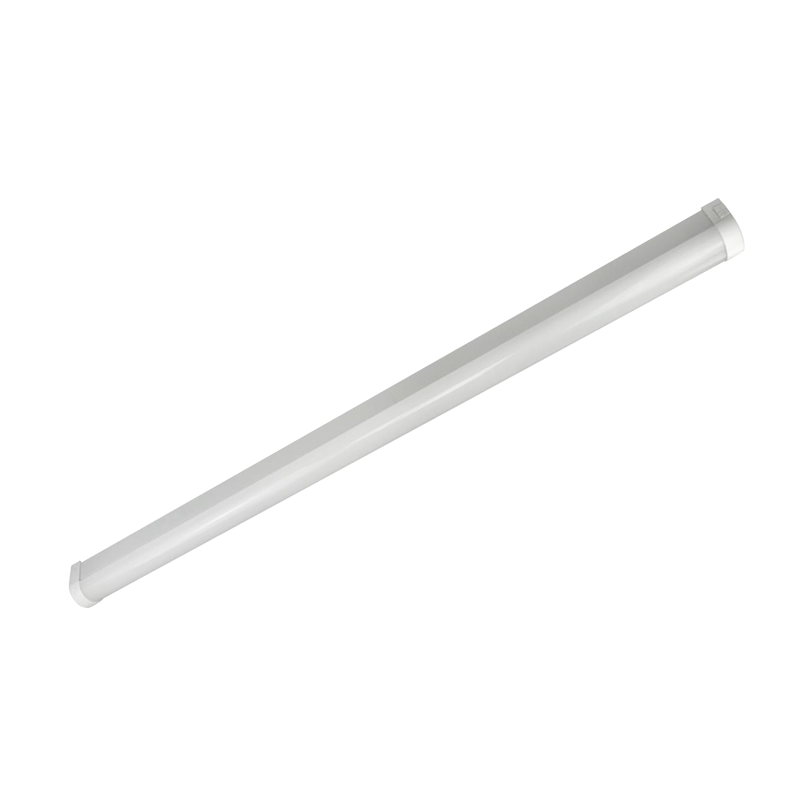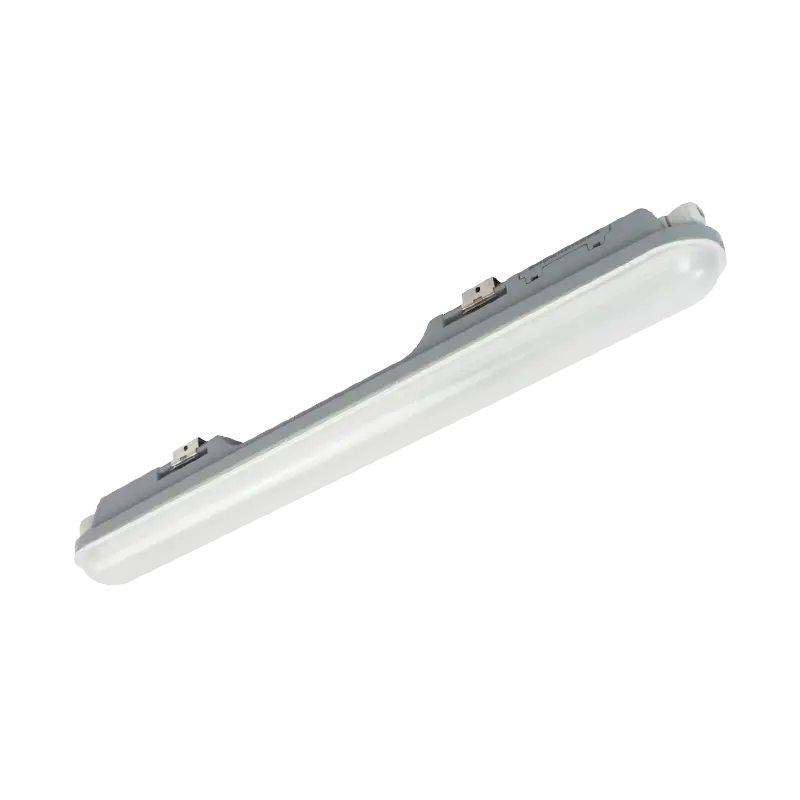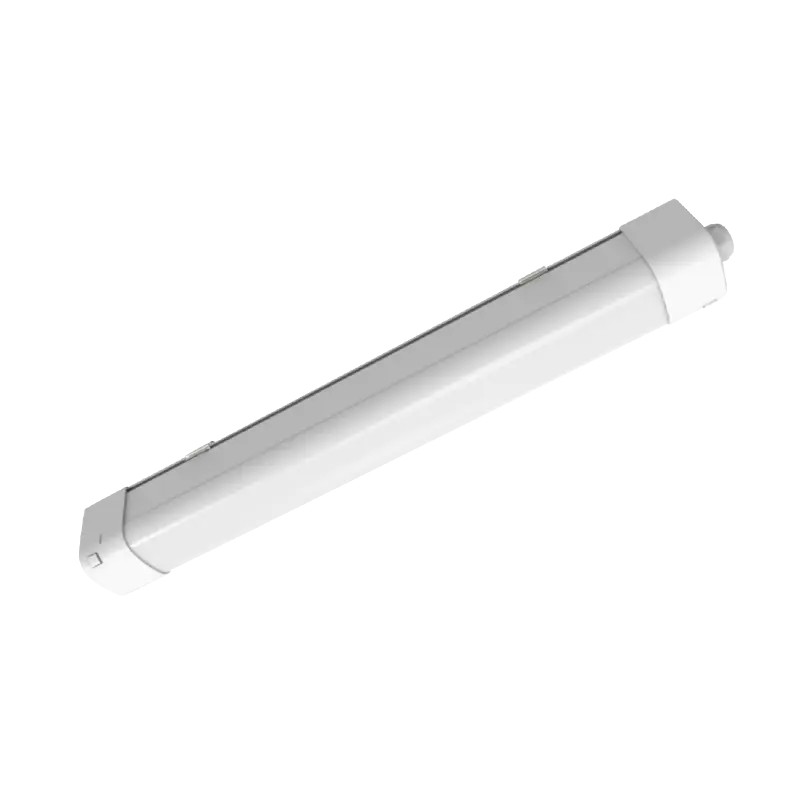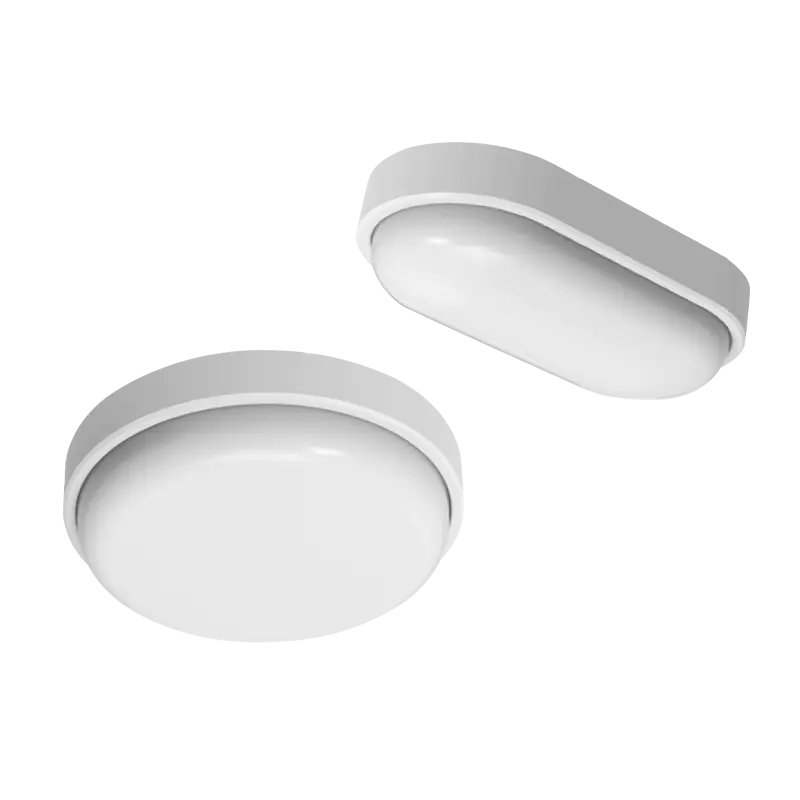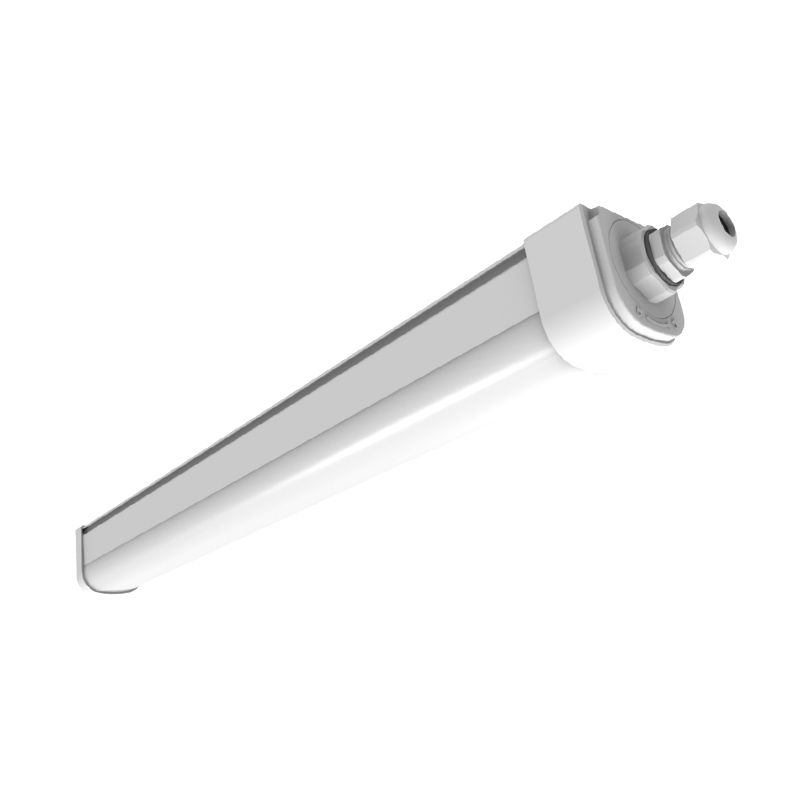


An LED tri-proof light is a sealed LED luminaire built for environments where moisture, dust, and corrosive substances would shorten the life of a normal fixture. The term "tri-proof" refers to three protections: waterproof, dustproof, and corrosion-proof. This is not a single coating but a combination of gasketed housing, sealed entry points, and materials that resist rust, salt, and chemicals.
In practice, most tri-proof lights are rated IP65 or higher. IP65 already guarantees dust-tight construction and protection against low-pressure water jets. For wash-down plants, outdoor tunnels, or flood-prone areas, specifiers often move up to IP66 or IP67, which add powerful water jets or temporary immersion.
Without that sealed design, a standard fixture in a dusty workshop can accumulate grime on the LED board, overheat, and fail. In a food factory, high-pressure cleaning can force water through an unsealed connector, causing a short circuit. In a coastal parking garage, salt-laden air corrodes unprotected metal and degrades seals. A tri-proof light is a practical answer to those specific risks.
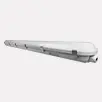
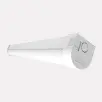
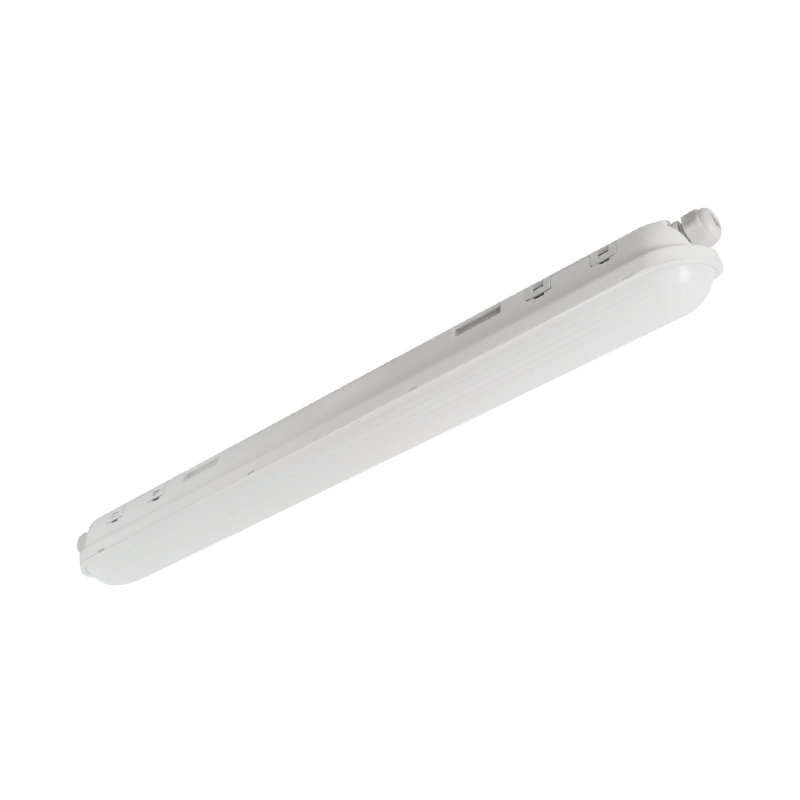
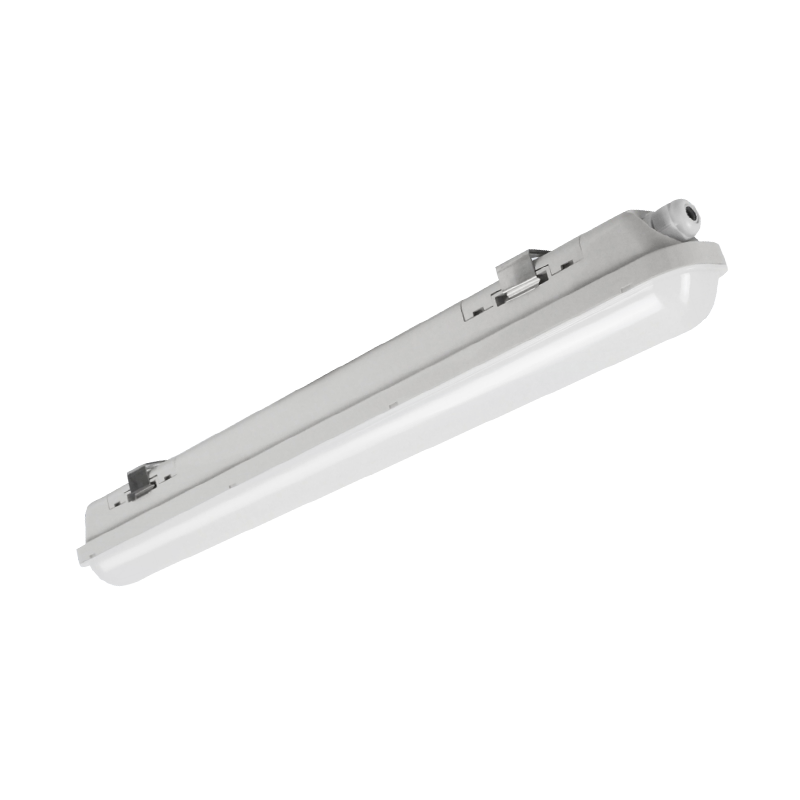
Tri-proof fixtures appear in two main forms — integrated package fixtures and T8 tube replacements — so the term covers a family of products. To see the range of sizes and optics, start with the LED tri-proof light product range.
The durability comes from engineering decisions in two areas: structure and materials. A sealed housing blocks the outside world; corrosion-resistant materials keep that seal viable for years. From a manufacturer's viewpoint, reliability depends on how well these two systems are integrated.
The housing seals the LED driver and wiring away from water and particles. A silicone or EPDM gasket sits between the lens and the base; when end caps are tightened, the gasket compresses and closes the gap. Cable entries use waterproof glands, and the lens is bonded or clamped so that there is no pathway for moisture to enter. This is why a tri-proof light can be hosed down without the interior becoming wet.
Housing materials are selected to survive the specific environment. Polycarbonate is lightweight and impact-resistant, while aluminum alloy adds strength and helps conduct heat away from the LEDs. Anodized or powder-coated surfaces slow down corrosion in humid, salty, or chemically active air. Gaskets and sealing rings are also chosen for resistance to UV and cleaning agents.
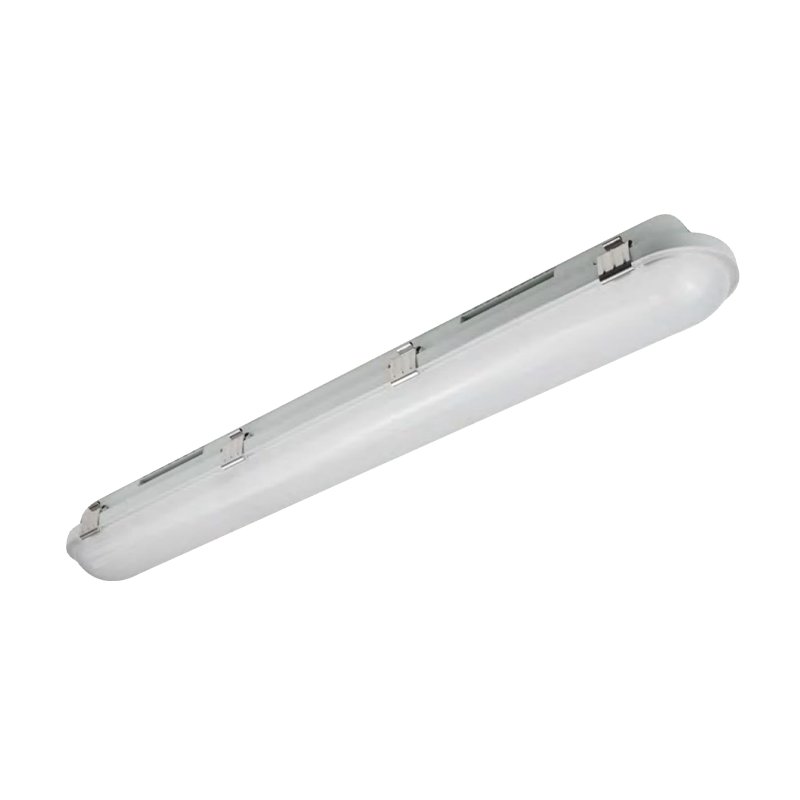
Sealed fixtures cannot rely on airflow cooling, so heat must move through the housing by conduction. Aluminum conducts heat better than plastic, so it keeps the LED junction cooler and slows lumen depreciation. If thermal performance is a priority, choose an aluminum alloy LED tri-proof light. The LG06J, for example, combines an aluminum housing with a 120-degree beam angle, which makes it a common choice for warehouse and workshop projects that need wide light distribution.
 Custom LG06J Aluminum Alloy 120° Beam Angle LED Tri-Proof Light Suppliers, OEM/ONingbo Longer Lighting Co., Ltd. is China LG06J Aluminum Alloy 120° Beam Angle LED Tri-Proof Light Suppliers and OEM Factory, details: M...View Product →
IP stands for Ingress Protection. The first digit (0–6) rates protection against solids, and the second digit (0–8) rates protection against liquids. For tri-proof lighting, the first digit is almost always 6, meaning dust-tight. The second digit determines how much water the fixture can handle.
| Rating | Dust protection | Water protection | Typical environment |
|---|---|---|---|
| IP65 | Dust-tight | Low-pressure water jets from any direction | Warehouses, workshops, covered parking |
| IP66 | Dust-tight | Powerful water jets | Food processing, wash-down areas |
| IP67 | Dust-tight | Temporary immersion in water up to 1 meter | Flood-prone sites, tunnels, outdoor pits |
Which one do you need? Start with IP65 for general dry manufacturing and storage areas. Move to IP66 if your team uses power washers or chemical cleaning. IP67 adds protection against temporary flooding, but it is not designed for continuous submersion. Choose the level that matches the worst condition the fixture will actually face.
The short version: replacing fluorescent or unsealed LED fixtures with LED tri-proof lights typically cuts energy use, reduces relamping, and avoids downtime caused by water or dust failures. The savings are visible in the long-term maintenance budget, not just the electricity bill.
| Factor | Traditional fluorescent | Basic LED fixture | LED tri-proof light |
|---|---|---|---|
| Typical lifetime | 10,000–15,000 hours | 30,000–50,000 hours | 50,000+ hours commonly cited |
| Energy consumption | High | Lower than fluorescent | Industry-cited savings up to 80% vs. fluorescent |
| Water and dust protection | Low | Low | IP65–IP67 |
| Maintenance frequency | Frequent lamp changes | Occasional cleaning | Sealed design minimizes cleaning and relamping |
| Resistance to chemical corrosion | Poor | Poor | Aluminum or coated PC housings resist corrosion |
For a facility manager, the most attractive difference is the combination of 50,000-hour life and sealed construction. Fewer lamp changes mean fewer ladders, fewer work hours, and less disruption to production. The energy savings are secondary to the reduction in unplanned maintenance.
You can identify the right location by looking for the environmental threat. If dust, moisture, vibration, or chemicals can reach the fixture, a tri-proof light is likely the correct specification.
In each case, the common thread is not just exposure to one element, but a combination of threats that would quickly defeat a standard fixture.
Tri-proof lights are available in two main configurations. Understanding the difference affects installation cost, maintenance strategy, and retrofit flexibility.
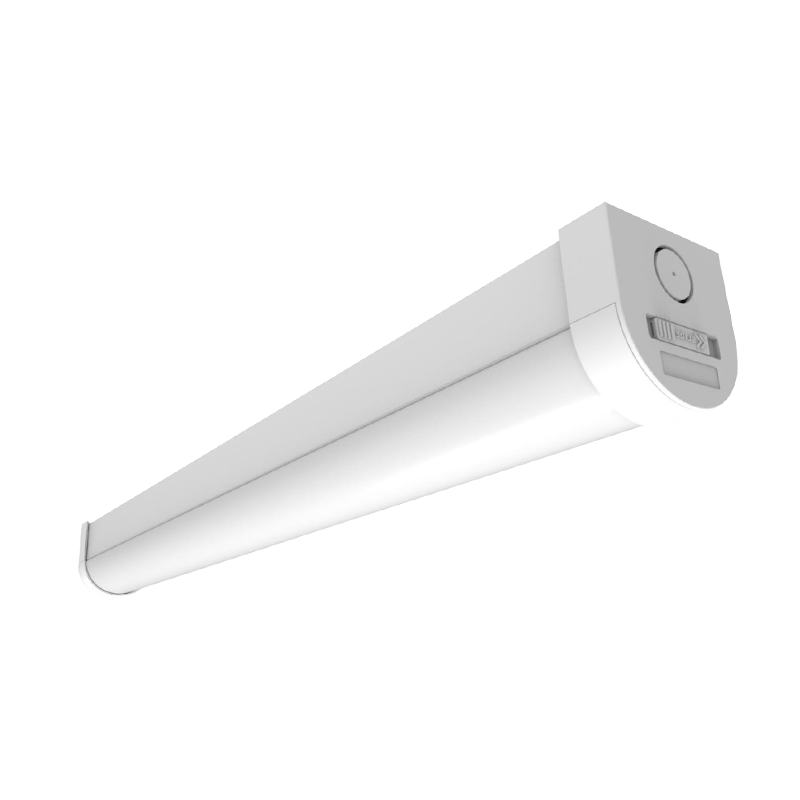
Integrated (package-style) fixtures combine the LED module, driver, and lens in one sealed unit. They mount directly to a ceiling or wall and are the fastest option for new construction. There is no separate lamp to replace, which reduces the number of possible entry points for moisture. If this approach works for your project, you can compare integrated LED tri-proof light options.
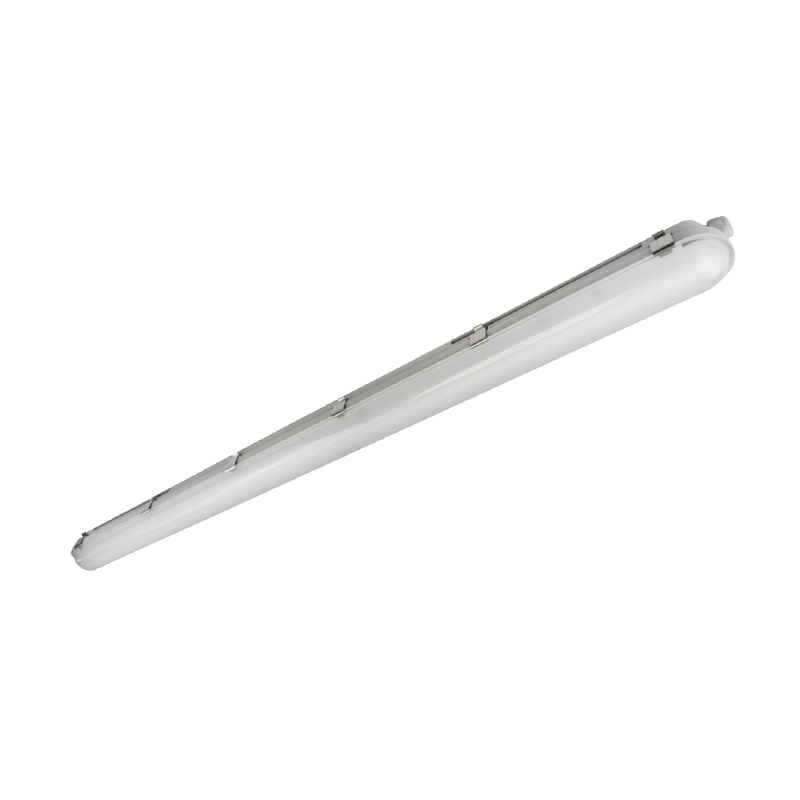 Custom Indoor LED Package Tri-Proof Light Manufacturers, SuppliersAs China LED Package Tri-Proof Light Manufacturers and LED Package Tri-Proof Light Suppliers, Ningbo Longer Lighting Co., Ltd. supply Cus...View Product →
T8 tube-style tri-proof lights use a sealed outer housing with a replaceable T8 LED tube inside. This is a popular retrofit choice because it allows maintenance teams to stock a single tube type, and in some cases the existing fixture housing can be reused. The outer housing provides the IP protection while the tube can be serviced independently. For upgrades from older T8 systems, T8 LED tube tri-proof lights simplify the changeover.
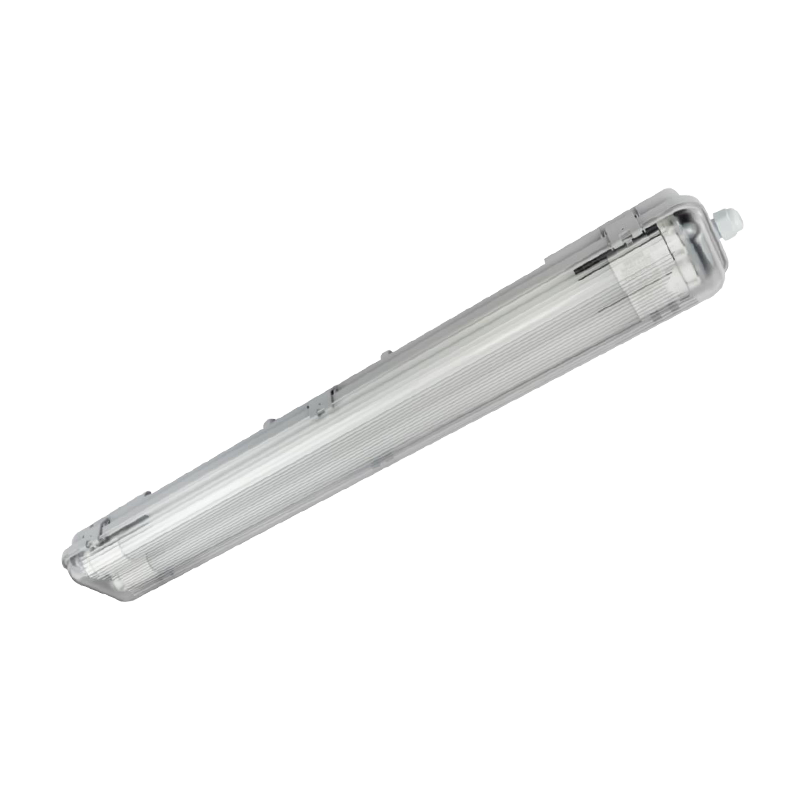 Custom Indoor LED Tube Tri-Proof Light Manufacturers, SuppliersAs China LED Tube Tri-Proof Light Manufacturers and LED Tube Tri-Proof Light Suppliers, Ningbo Longer Lighting Co., Ltd. supply Custom LE...View Product →
| Consideration | Integrated | T8 tube style |
|---|---|---|
| Installation | Complete fixture mounts directly | Housing plus separate tube |
| Maintenance | Whole fixture replaced if failure occurs | Tube can be replaced without changing housing |
| Retrofit flexibility | Best for new builds or full replacements | Easier for existing T8 layouts |
| Typical use | New warehouses, workshops, parking garages | Retrofit projects and tube-based maintenance programs |
When comparing quotes, work through the following checklist. Each item corresponds to a decision that affects total cost and performance.
Confirm the IP rating against your worst-case exposure, not the average humidity level. Then choose the housing material. Aluminum alloy provides good heat transfer and mechanical strength; polycarbonate is lighter and cheaper, but may not dissipate heat as effectively in hot environments. If the atmosphere contains salt or chemicals, specify a corrosion-resistant finish.
Lumens determine brightness, watts determine energy cost, and beam angle determines how evenly the light spreads across the floor. A common choice for medium-height industrial spaces is a 120-degree beam angle, which balances spread and intensity. For high-bay applications, a narrower beam may be needed to reach the work plane. Ask for photometric data before you commit to a layout.
4000K neutral white suits general industrial work; 5000K cool white helps in fine assembly or inspection tasks; 6500K can be used in retail display areas. Keep one color temperature throughout a building for visual consistency and easier lighting control.
Make sure the product carries the certifications your market requires, such as UL for North America or CE for Europe. Ask for test reports and check that the driver has its own safety approval. If you are sourcing from Asia, verify the factory's quality control processes. Longer Lighting, for example, describes itself as a high-tech manufacturer with in-house R&D and TUV and SGS witness laboratories, and states that it participates in national and industry standards. Confirm that your supplier can offer equivalent documentation.
Installation is straightforward, but the seal depends on correct assembly. When mounting a tri-proof fixture, make sure the gasket sits flat and the end caps are tightened evenly. A pinched or wrinkled gasket can create a path for water.
In short, a tri-proof light is not completely maintenance-free, but the maintenance it needs is far less frequent and far more predictable than with a conventional open fixture.



No.8, Ankang West Road, Zonghan Street, Cixi City, Zhejiang Province, P.R.China
0086-574-6320 0283
Copyright © Ningbo Longer Lighting Co., Ltd.
All Rights Reserved.
 Wholesale LED Lighting Fixtures Manufacturers

 Deutsch